6G-PHYSEC

(Hybrid) Technical Review Meeting (Paris, Aug. 28-29)

The upcoming technical review meeting for the COST Action 6G-PHYSEC is a comprehensive forum designed to evaluate progress, share insights, and foster collaboration among diverse stakeholders. The event will feature detailed reports from various working groups, highlighting recent research developments, technical advancements, and ongoing initiatives in the field of physical security. Participants will also benefit from keynote talks and presentations delivered by leading academics, industry partners, SMEs, and representatives from other EU-funded projects, providing a multidisciplinary perspective on emerging challenges and innovative solutions. This collaborative gathering aims to strengthen the network of experts, facilitate knowledge exchange, and align future efforts to enhance the effectiveness and resilience of physical security measures across Europe.

Location: (ENSEA) 6, avenue du Ponceau, Cergy-Pontoise
Room: “Salle du Conseil” (Counsel Room), 1st floor

Local contact: Salome Boucherit, salome.boucherit@ensea.fr

Invited speakers/representatives

1) Universities / Research institutions / Big companies

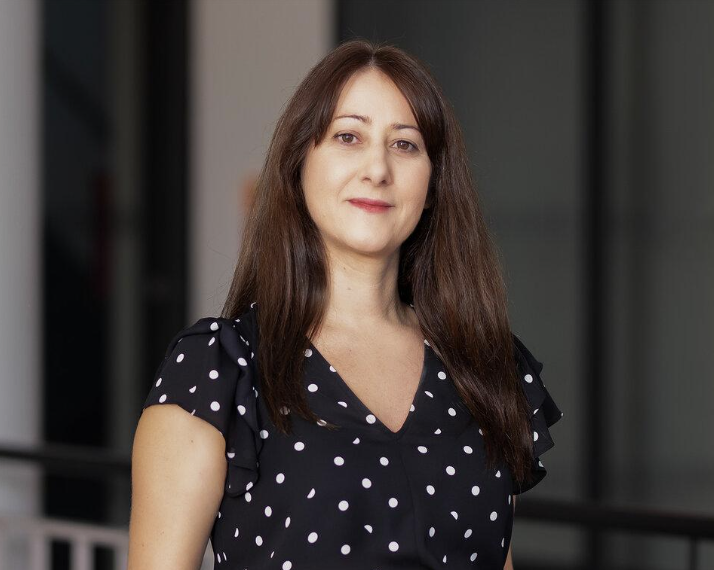
Arsenia Chorti

Arsenia Chorti is a Professor at the École Nationale Supérieure de l' Électronique et de ses Applications (ENSEA) at the ETIS Lab UMR 8051 and a Visiting Scholar at Princeton University. Her research spans the areas of wireless communications and wireless systems security for 5G and 6G, with a particular focus on physical layer security. Current research topics include: context aware security, multi-factor authentication protocols, 5G / 6G and IoT, anomaly detection, machine learning for communications, new multiple access techniques and scheduling. She is a Senior IEEE Member, has served as Associate Editor in Chief of the IEEE ComSoc Best Readings, of the IEEE INGR on Security and Chair of the IEEE Focus Group on Physical Layer Security, while she has also served in the IEEE P1940 Standardization Workgroup on Standard profiles for ISO 8583 authentication services and has served as a member of the IEEE Teaching Awards Committee. She is currently a Member of various ITU Working Groups and has participated in the reduction of the ITU report M.2516-0 on Future technology trends of Terrestrial International Mobile Telecommunications Systems Towards 2030 and Beyond (sections on trustworthiness).

Physical layer security in 6G: From theory to practice

Physical layer security is being considered for 6G due to its potential to provide solutions for delay, power and computationally constrained 6G systems. Motivated by this, the aim of this talk is twofold. First, we make the case that physical awareness, attained thanks to novel 6G radio capabilities, will be an enabler of PLS. Secondly, we demonstrate how fundamental information theoretic metrics can serve as design criteria for realistic PLS systems. As a concrete use case, this talk focuses on a novel authentication and key agreement (AKA) scheme that integrates physical layer authentication (PLA) and secret key generation (SKG) to enable fast and low-footprint AKA, that is provably robust against both passive and active attacks. Looking ahead, we discuss future steps towards standardization efforts to facilitate real-world deployment and ensure interoperability in emerging 6G networks.

Markus Dillinger

Markus Dillinger received his Diplom-Ing. degree in telecommunications in 1990. In 1991 he joined the Mobile Network Division at Siemens for development of cellular base stations. At Siemens times he led European research projects for mobile communications. In 2010 he joined Huawei Germany and was director for enterprise solutions for several sectors. In September 2016 he was appointed as Executive Committee member for the 5GAA and re-assigned in following years. These 3 Executive Committee members are responsible for the 5GAA operation. He was the initiator of 5GAA and leads the Munich team for their technical contributions to Working Groups in 3GPP / 5GAA and for 5G evolution and to 6G.

Security, trust and privacy for 6G wireless systems

The talk will evaluate different approaches of different studies and proposals for trust and security integration in 6G. The challenges for Native AI in 6G networks will play a pivotal role and the pillars for trust and trust worthiness need to agreed upon in a broad societal consensus before any technical implementation can be standardized. Significant research gaps remain to be addressed to answer many questions:  How to design a trust framework for 6G? How to provide trustworthy autonomous network operations with embedded intelligence ? How do we integrate diverse components into a trustworthy 6G ecosystem? In particular, the challenges of the automotive industry will be addressed, and early 5GAA discussions will be elaborated.

Gunes Karabulut Kurt

Professor and Canada Research Chair (Tier 1) in New Frontiers in Space Communications Polytechnique Montréal, Canada
Gunes Karabulut-Kurt is a Canada Research Chair (Tier 1) in New Frontiers in Space Communications and a Professor at Polytechnique Montréal, Montréal, QC, Canada. She is the Director of the Poly-Grames Research Center, and is co-founder and Director of Education and Training of ASTROLITH, Transdisciplinary Research Unit of Space Resource and Infrastructure Engineering at Polytechnique Montréal. She is also an adjunct research professor at Carleton University, Canada. Gunes received the B.S. degree with high honors in electronics and electrical engineering from Bogazici University, Istanbul, Turkiye, in 2000 and the M.A.Sc. and the Ph.D. degrees in electrical engineering from the University of Ottawa, ON, Canada, in 2002 and 2006, respectively. She worked in different technology companies in Canada and Turkiye between 2005 and 2010. From 2010 to 2021, she was a professor at Istanbul Technical University. Gunes is a Marie Curie Fellow and has received the Turkish Academy of Sciences Outstanding Young Scientist (TÜBA-GEBIP) Award in 2019.

Backhaul-related Security Concerns in Non-Terrestrial Networks

According to the 3GPP definition, Non-Terrestrial Networks (NTN) are networks or portions of networks that utilize airborne or spaceborne platforms. These platforms include Uncrewed Aircraft Systems (UAS), High Altitude Platform Stations (HAPS), and satellites in various orbits, ranging from Low Earth Orbit (LEO) to Geosynchronous Orbit (GEO). The NTN elements act either as relays or base stations. Their high altitudes provide several advantages regarding the coverage patterns. However, the lack of wired backhaul connectivity between NTN elements and the core network creates significant challenges for the emerging deployments. This talk aims to focus on these challenges, induced by the wireless and mobile nature of the backhaul channels. Active and passive attacks targeting backhaul links will be considered, along with potential countermeasures. Open research directions will also be discussed.

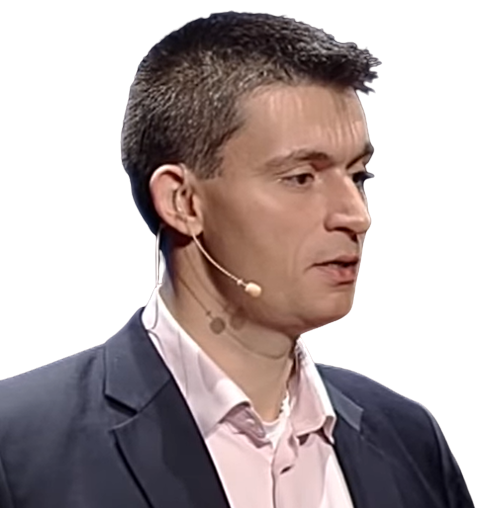
Lorenzo Mucchi

Lorenzo Mucchi (M’98-SM’12) received the Laurea in telecommunications engineering and the Ph.D. in telecommunications and information society from the University of Florence, Italy, in 1998 and in 2001, respectively. He is an Associate Professor at the University of Florence, Italy. His research interests involve theory and experimentation of wireless systems and networks including physical-layer security, visible light communications, ultra-wideband techniques, body area networks, and interference management. Dr. Mucchi is serving as an associate editor of IEEE Trans on Communications and IEEE Access, and he has been Editor-in-Chief for Elsevier Academic Press. He is member (2013) and chair (2022) of the European Telecommunications Standard Institute (ETSI) Smart Body Area Network (SmartBAN) technical committee and IEEE ComSoc distinguished lecturer (2025-2026). He has been lead organizer and general chair of IEEE (2) and EAI (1) international conferences.
ETSI SmartBAN: standardising the security for wireless body area networks

Wireless Body Area Networks (WBANs) are increasingly vital in healthcare, sports, and personal monitoring applications, where secure and reliable communication is paramount. ETSI, the European Telecommunications Standards Institute, has launched the SmartBAN initiative in 2013 to address the unique challenges of WBANs, focusing on interoperability, low power consumption, and robust security. This presentation introduces ETSI and the motivations behind the creation of SmartBAN, highlighting the need for standardized solutions in the rapidly evolving WBAN landscape. It outlines the scope and activities of the SmartBAN group, with a particular emphasis on the integration of Physical Layer Security (PhySec) techniques to enhance data protection and resilience against attacks in low resourced devices that enables in-body and on-body networking systems.  Finally, the talk explores potential synergies between ETSI SmartBAN and the COST Action 6G-PhySec initiative, aiming to foster collaboration in shaping future secure communication frameworks for 6G and beyond.

Nikola Serafimovski

Nikola Serafimovski is a wireless communications expert and global thought leader in next-generation connectivity. He holds a PhD from the University of Edinburgh, where his research on optical and wide-area wireless networks has been cited over 2,000 times. A key figure in global standards development, Nikola serves as Chair of the IEEE 802.11br (Enhanced Light Communications), former Chair of IEEE 802.11bb and Vice-Chair of IEEE 802.15.13, helping define the future of light-based communication. He previously held senior strategy and product roles at pureLiFi, where he translated deep technical research into commercial-ready innovations. Beyond the lab and boardroom, Nikola is a respected public speaker and ecosystem builder. He co-chaired the Light Communications Alliance and has delivered impactful TEDx talks that challenge conventional thinking about wireless access. He regularly contributes to IEEE and industry working groups and has published influential articles. His work bridges academic excellence, technical leadership, and market-shaping influence.

FTH Standardisation Activities

The talk will address how the UK’s Federated Telecoms Hubs (FTH) engage in standards. Specifically, it will provide an overview of standardisation activities being undertaken in the FT, provide an overview of the future plans and provide practical advise for academics looking to engage in standardisation activities.

2) SMEs/EU projects

Neeli Prasad

Neeli Prasad (CEO of SmartAvatar B.V. )

Dr. Neeli R. Prasad is a global authority in vehicular technologies, wireless communication, cybersecurity, AI, and the Metaverse, with 25+ years of leadership in academia, industry, and startups. She is an accomplished entrepreneur, CEO & Co-Founder of SmartAvatar B.V. (Netherlands & USA), and former Professor at Aarhus University. She also founded the pioneering Living Lab; at Aalborg University. Dr. Prasad drives innovation from concept to commercialization and has been recognized by CISCO, HUAWEI, and Nokia. She serves as IEEE VTS VP Membership, Chair of Volunteer Engagement, an elected BoG member, and Treasurer of IEEE WIE. She has chaired over 40 IEEE conferences and led major EU and U.S. research programs. With 200+ peer-reviewed publications, authored books, chapters, and global outreach initiatives, her work champions sustainable, inclusive, and socially responsible tech solutions.

Zero Trust for the Air: PLS-Native Zero Trust Architecture for 6G

6G mobile systems collapse the old perimeter: radios move, beams steer, robots act on wireless intent, and Artificial Intelligence (AI) and sensing drive decisions in real time. This keynote argues that Zero Trust (ZT) must extend all the way down to the air interface—treating every radio assertion as untrusted until proven by both cryptography and physics. I introduce a Physical-Layer Security (PLS)–native Zero Trust Architecture (ZTA) in which post-quantum cryptography (PQC) identities are bound to where/when/how a device transmits using physical-layer presence (PHY-presence)derived from time-of-flight (ToF), channel decorrelation, radio-frequency (RF) fingerprints, and PHY-layer authentication, plus jammer/spoof detection. The result is a policy grammar that fuses credentials, RF context, and risk into sub-10-millisecond permit/deny decisions—continuous verification implemented across User Equipment (UE), gNodeB (gNB), Radio Access Network (RAN) Intelligent Controller (RIC), and the core network, and resilient enough for Joint Communication and Sensing (JCAS) workflows. We pressure-test the blueprint with three real-world vignettes: (1) Non-Public Networks (NPNs) for 6G robotics under spoof/jam stress, (2) AI-native RAN/JCAS facing adversarial pilot signals, and (3) city-metaverse access where proximity cannot be faked. The talk maps these needs to concrete standards hooks in the Third Generation Partnership Project (3GPP)—specifically Service and System Aspects Working Group 3 (SA3) and Radio Access Network Working Group 1 (RAN1)—and to privacy controls using Reconfigurable Intelligent Surfaces (RIS). It proposes Bronze/Silver/Gold capability tiers, conformance test benches (replay, adversarial pilots, captive jammers), and a cross-standards development organization (SDO) liaison plan, with clear Key Performance Indicators (KPIs) for detection, resilience, entropy, and proximity assurance—so Zero Trust for the air becomes an operational reality in 6G deployments.

Antonios Lalas

Antonios Lalas (Technical manager of NATWORK)
NATWORK: As the Internet of Things and digital technologies continue to proliferate rapidly, cybersecurity has become increasingly vital. However, despite its significance, cybersecurity encounters numerous challenges, ranging from adaptability to responsiveness to attacks. With this in mind, the EU-funded NATWORK project aims to address these challenges by developing an innovative, bio-inspired, AI-based 6G cybersecurity and resilience framework with low energy consumption. This framework will leverage AI and resilient biomimicry to enable networks to self-regulate and adapt to their specific circumstances while adhering to service level agreements, taking a holistic approach and considering all elements in a cross-sector business environment to address the diverse requirements and challenges that arise. Furthermore, the gathered data will facilitate enhanced self-resilience and flexibility in future 6G network security measures. Physical Layer security is also progressed in view of delivering key-less perennial and net-zero resilience to wireless links attacks through robust anti-jamming methods, physical layer key generation (PKG) and novel cybersecurity aspects of Reflective Intelligent Surfaces (RIS), as fundamental components of next generation networks.

Jamming Detection and Mitigation in Next Generation Networks:
A Robust Methodology For Various Network Protocols & Jamming Types

Amad Shokair

Amad Shokair (5G/6G Systems Engineer, Greenerwave)
Greenerwave: Greenerwave is a French deeptech company specializing in the development of Reconfigurable Intelligent Surfaces (RIS) and advanced metasurface-based antenna systems. Founded with the goal of transforming wireless propagation through physics and programmability, the company designs hardware and algorithms that embed intelligence directly into the electromagnetic environment. Their core technology involves custom-designed metasurfaces, such as cavity-backed and broadband structures, capable of dynamically manipulating the phase and amplitude of incident waves. These metasurfaces are integrated with compact control units and scalable software interfaces to deliver fully controllable beamforming solutions. Greenerwave’s RIS operate across multiple frequency bands, including FR, FR2, and FR3, and are compatible with digital baseband platforms and O-RAN networks via real-time control protocols. The company actively contributes to European research initiatives focused on 6G development, exploring hybrid beamforming architectures, joint communication and sensing (JCAS), over-the-air experimentation, and RIS integration within O-RAN infrastructures. Greenerwave views RIS as more than coverage enhancers; they are key enablers of situational awareness, spectral efficiency, and increased trust in wireless systems. Their approach emphasizes engineering pragmatism, experimental validation, and security-by-design principles. Through a unique fusion of electromagnetic innovation and system-level integration, Greenerwave aims to advance the foundation of intelligent, resilient, and secure 6G networks.

Reconfigurable Intelligent Surfaces and JCAS:
Building Blocks for Trustworthy 6G Systems